It's Like a Hotpot Revolution.
Hello and welcome to the world of charging station! As you dive into this industry, you'll frequently encounter the term "split-type charging station." It might sound technical, but don't worry—we can use a simple analogy to understand it.
Imagine a hotpot meal:
- The traditional integrated charging station is like each person having their own individual hotpot. Each pot has its own induction cooker, broth, and fuel source. Want to serve more people? You need more power outlets and more pots. Some tables have high heat (fast charging), others low heat (slow charging)—resources can't be shared.
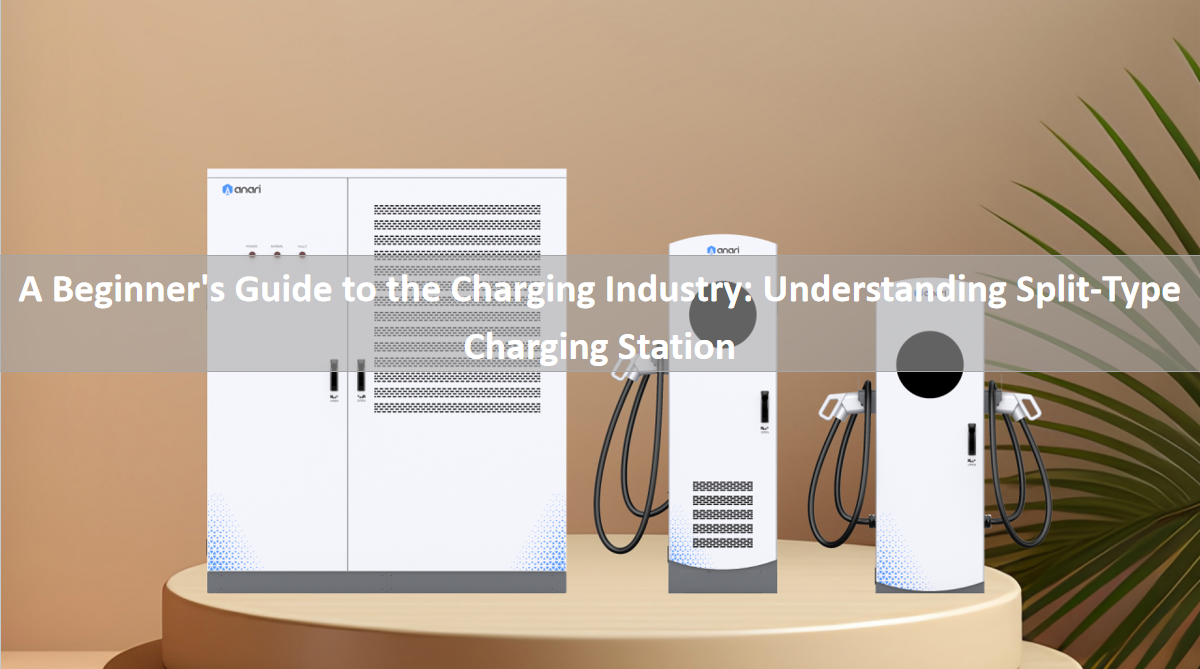
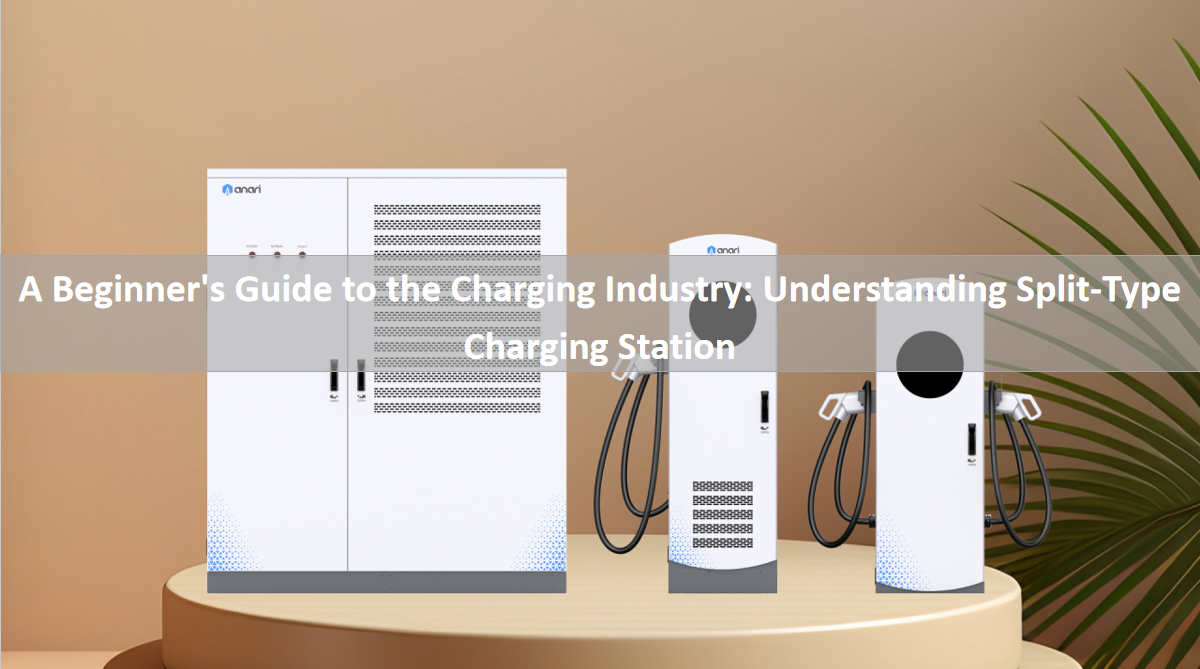
- The split-type charging station is like a powerful centralized induction cooker plus multiple plain pots. All the "firepower" (power) is concentrated in one robust host unit and distributed via "pipes" (DC busbars) to the pot at each seat. When it's crowded, the heat can be intelligently allocated; when it's quiet, the full power can be directed to a single pot.
Does that make it clearer? Now, let's explore how this "hotpot revolution" actually works.
1. Why "Split"? What Challenges Do Traditional Station Face?
To appreciate the split-type design, we must first understand the "pain points" of integrated station in large-scale stations:
- "Feast or Famine" Scenario: Once a vehicle is fully charged, that station sits idle while others wait in line. Power is "locked" to a single station and cannot flow elsewhere.
- Redundant "Hearts": Every station contains its own complete "heart" (power modules) and cooling system, taking up space, generating noise, and creating multiple maintenance points.
- Grid Stress: If all station operate at full power simultaneously, the impact on the distribution transformer is like turning on all high-power appliances at once, risking overload ("tripping") and requiring costly grid capacity upgrades.
- Difficult to Upgrade: Want more power? You might have to replace the entire station.
The core idea of the split-type charging station is "centralizing resources for greater efficiency."
2. The "Anatomy" of a Split-Type Charging Sile
It consists of two main parts, akin to a brain with limbs:
- The Centralized Host (The Brain & Heart):
- Location: Typically placed near the power distribution room or in a corner of the site.
- Function: This is the energy hub. It integrates all power modules, the main control system, and cooling units. It's responsible for drawing power from the grid, converting it to DC, and intelligently managing and distributing it.
- Key Feature: Modular design, like Lego bricks, allowing flexible addition or replacement of power modules.
- The Charging Terminals (The Agile Limbs):
- Location: Distributed across parking spots.
- Function: These contain only the cable/gun, display, billing unit, and communication module. They cannot "generate" power themselves; they are merely the energy outlet and user interface.
- Key Feature: Very compact, simple, flexible to install, and generate almost no noise.
Connecting them is the crucial "energy artery"—the DC busbar. Power flows through it from the host to each terminal.
3. Where Do Its "Superpowers" Shine? (Application Scenarios)
This architecture makes it inherently suited for demanding scenarios:
- Bus/Logistics Depots: Vehicles return to base simultaneously on a fixed schedule. The host can intelligently allocate total power to all vehicles during off-peak night hours, ensuring the entire fleet is fully charged by morning.
- Space-Constrained Older Residential Areas: The host is tucked away in a corner, while only a slim cable and compact terminal are needed at the parking spot, preserving valuable space.
- "Charging Rush" at Highway Service Areas: During holiday traffic surges, the split-type system can dynamically limit power, ensuring all vehicles receive a reasonable charge rate without overloading the transformer. When traffic is light, it can deliver ultra-high power to a single vehicle.
- Future-Proofing for "Ultra-Fast Charging": When 1000V or higher-voltage vehicles become common, only the central host needs significant upgrades, with minor terminal modifications, protecting the initial investment.
4. Benefits for Operators
As a station operator, you would appreciate these advantages:
- Cost Savings: Higher overall power utilization means serving more vehicles with the same electrical capacity. The simple terminal design has lower failure rates, and maintenance focuses on a single host location.
- Operational Ease: A single backend platform monitors all terminals and the host, enabling remote management, intelligent scheduling, and unified software updates.
- Scalability & Flexibility: To meet growing demand, you can expand capacity by simply adding more power modules to the host, like building blocks.
5. Of Course, It's Not a "Silver Bullet"
Split-type stations also have their considerations:
- Higher Initial Investment: Deploying the host and busbars costs more upfront than installing multiple integrated station. It's better suited for large-scale, high-throughput stations with long-term operational plans.
- More Complex Design: Requires professional engineering for electrical layout and power planning—it's not a simple "plug-and-play" solution.
- Single Point of Failure Risk: Although hosts have redundant modules, if the entire host fails, all connected terminals go offline. This demands extremely high host reliability.
Looking Ahead: From "Charging Point" to "Smart Energy Node"
The split-type charging station represents more than just a change in hardware form; it's a paradigm shift in thinking. It transforms a charging station from a simple "collection of outlets" into an intelligent energy node capable of communicating with the grid, dynamically dispatching power, and participating in peak shaving and valley filling. This is a crucial component in building the new power system and intelligent transportation networks.
So, next time you see a row of sleek charging terminals without a visible "big box" nearby, remember—there's likely a powerful "centralized host" working diligently behind the scenes. That's the split-type charging station: using centralized intelligence to deliver flexible and efficient energy supply.
We hope this "hotpot guide" helps you get started on your exploration of the charging world.
Discover the flexible design of the Fora Series and explore its technical specifications: Fora Series Split-Type DC Charging Station





















.png)

